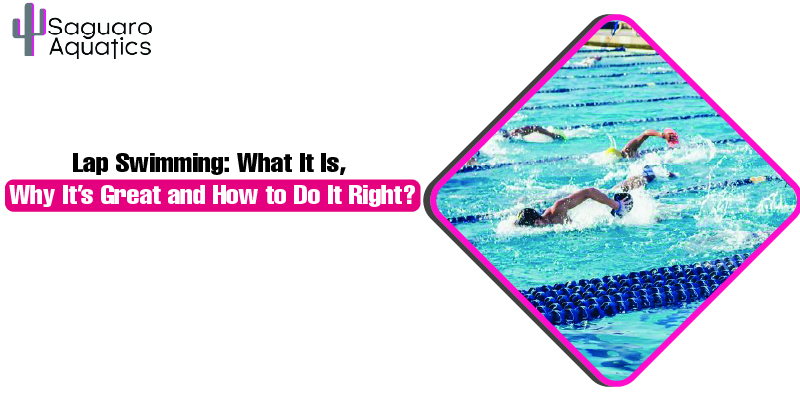
Swimming is the thing that’s all fun and games with the kids splashing around, floating lazily on our backs and jumping in to cool off. But there’s another side to swimming, and it’s the fitness-focused side, which is a whole different story. Lap swimming is basically a form of exercise that happens in the water, simply a way to build strength and endurance, keep your overall health in check, and, actually, it can be super calming too. So calm, in fact, that you might just find yourself looking forward to it. Let’s take a closer look at what lap swimming is really all about, how it can benefit you, who should steer clear, and also learn how to get started or improve your skills at Saguaro Aquatics.
So stick with us till the end of this post to discover the ins and outs of lap swimming.
What exactly is lap swimming, and how does it differ from regular swimming?
Lap swimming is a whole lot more structured than that casual pool time we often picture when we imagine a fun day at the pool.
Let us put it this way:
- Purpose-built lanes
Lap swimming is done in pools with actual lane lines or floating lane dividers. Each lane is meant for one person going back and forth, doing laps, but during busy times, you might end up sharing a lane with someone else. - Built for repetition
It’s all about steady, repetitive swimming from one end of the pool to the other, turning around, then back again, over and over. It’s basically that simple, and that repetition will really help you build endurance and strength, rather than just messing around in the water or splashing. - The main idea is fitness.
Now, while regular swimming or just messing around in the pool can be super social and fun, lap swimming is more about moving steadily, working on your stroke and distance, and getting your body in shape. - You have goals and plans.
When you’re swimming laps, you’ll often be keeping track of how many laps you do, how far you go, how fast you swim, and how well you breathe – and some people even do special drills to focus on their stroke. It’s a whole different ball game compared to a casual swim, where you just kind of cruise around.
What are the health benefits of lap swimming for fitness and mental well-being?
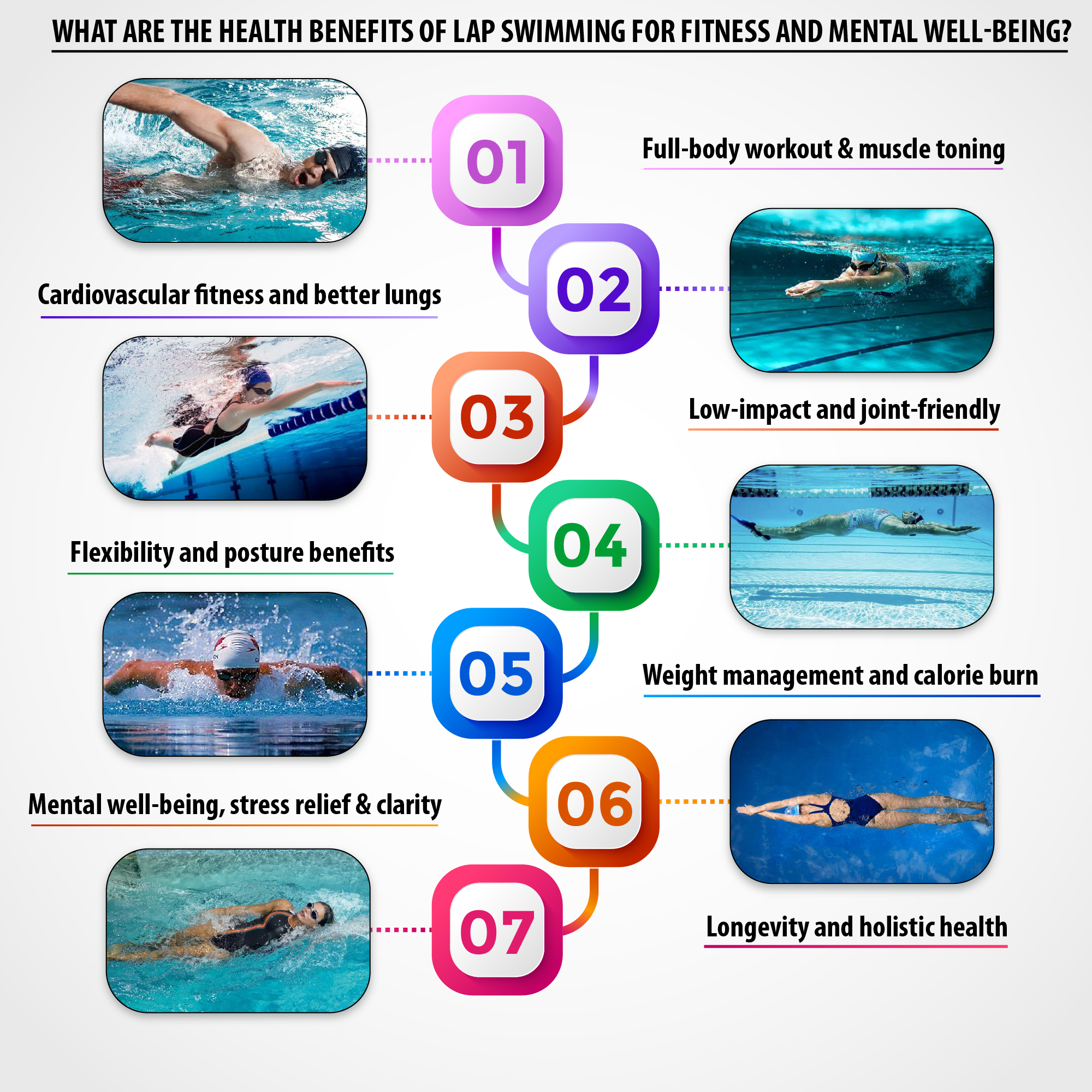
Lap swimming packs one hell of a punch for overall health. Whether you’re looking to tone up, drop a few pounds, improve your heart health, get a good stress reliever or just get moving without exacerbating joint problems, lap swimming really does cover all the bases. Let me break it down for you:
- Full-body workout and muscle toning
Every stroke involves your arms, shoulders, core, back and legs – all of which get put to work – and because of the water resistance, your body’s working way harder than you would on land, which in turn helps you build strength and get that lean muscle tone you’ve been after. - Cardiovascular fitness and better lungs
The continuous movement and rhythmic strokes of lap swimming really do put the hammer down on your heart rate, improve circulation, build stamina, and enhance lung capacity. - Low-impact and joint-friendly
Water takes a lot of the pressure off your joints, which makes lap swimming the perfect option for folks with joint problems, arthritis, or injuries. Plus, it’s a great workout option for anyone who wants a good workout without putting too much stress on their joints.
(Also read from our previous blogs: Find Relief from Joint Pain Through Water Therapy for Arthritis)
- Flexibility and posture benefits
The motion of swimming – all that stretching and twisting – it’s actually really good for keeping your body mobile and flexible. Over time, it can even help you improve your posture. - Weight management and calorie burn
Because water makes every movement more demanding, lap swimming is a great calorie burner, which in turn helps with weight control and boosts your metabolism. - Mental well-being, stress relief and clarity
There’s something pretty meditative about the repetitive motion of swimming towards a goal – combined with the soothing feel of the water. Loads of swimmers swear by lap swimming as a way to reduce stress, clear their minds, improve their mood and even boost focus. - Longevity and holistic health
Finally, because lap swimming combines all the benefits of cardio, muscle strength and flexibility with the low-impact stress of water, it can really help support long-term health, mobility and overall wellness.
Who should avoid lap swimming due to medical conditions or other risks?
Lap swimming is pretty safe for most people, but, like with any physical activity, you gotta be extra careful in certain situations and get a doctor’s clearance if need be. You should probably give it a miss if you fall into any of these categories:
- Pre-existing joint or skin sensitivities
Even though water is generally easy on the joints, pool chemicals can sometimes be a real pain in the skin, especially if you’re sensitive. If you’ve got skin conditions like eczema or psoriasis, chlorinated water might be a no-go, so it’s probably a good idea to get a doctor’s take first. - Respiratory or chlorine-intolerance issues
Some folks can find the humid, chlorine-rich environment a real trigger for asthma or breathing issues. While swimming can actually improve lung function, it’s still a good idea to get the all clear from a doc if you’ve got a serious respiratory problem. - Injuries that limit your mobility or swimming ability
If you’ve got a serious injury, especially to your limbs, spine or joints, or are still recovering from surgery, then pool activity is probably not going to be the best idea, at least not on your own. You might want to look at water exercise under expert guidance, though. In some cases, you may have other options that are less bouncy than lap swimming, which you can try. - Lack of swimming ability
If you can’t swim at all, getting into a lap pool can be a real risk, especially if it’s a deep one. Most pools that offer lap swimming expect you to be able to swim confidently across the length of the pool before you get in. - Certain heart or circulatory conditions
Because swimming gets your heart rate up and demands a certain level of breathing control, people with heart problems, uncontrolled blood pressure, or other serious medical conditions should probably get a doctor’s opinion before jumping into regular lap swimming sessions.
How can beginners effectively prepare and improve their lap swimming technique?
To be honest, starting lap swimming isn’t as intimidating as it sounds. With some smart practices and a bit of rhythm, you can make progress quickly and actually enjoy yourself. With practice, patience and some regularity, beginners can pretty quickly learn to move from being all awkward in the water to swimming smoothly and efficiently – and then start enjoying all the good feelings and benefits of lap swimming along the way.
Here are some tips and steps for beginners to try out:
- Start with some basic swimming skills
You don’t have to be a total swimmer to get started – just be comfy swimming a few lengths and being able to breathe in the water. Many pools and aquatic centers offer swimming lessons or have drop-in swim times for beginners. - Take a minute to warm up.
Before you get going full speed, just do a minute or two of easy paddling or some gentle strokes, and stretch out your shoulders, arms and legs to avoid getting all cramped up. - Pay attention to your breathing.
Good lap swimming is all about finding a rhythm that works for you – so instead of holding your breath, try exhaling underwater and taking quick breaths at each stroke. This will really help you conserve energy and swim a lot smoothly. - Try out some structured workout sessions.
Instead of just going for it and swimming until you crash and burn, try breaking it up with some interval training, like 4 x 100 meters with a few minutes rest in between. This will help you gradually build your endurance and strength. - Mix it up with different strokes and intensities.
Don’t get stuck in a rut and just swim freestyle all the time – try out some backstroke, breaststroke or even just some gentle kicks or floating to keep things interesting. This will keep your muscles guessing and prevent boredom. - Set yourself a realistic goal.
Aim to make it a regular thing and get in the pool 2-3 times a week. In fact, it’s often more effective to keep it consistent like that rather than going in fits and starts, and your stamina will start to build, allowing you to increase the duration or frequency. - Listen to your body
Especially when you’re just starting, take breaks when you need to, hydrate well and be realistic about your limits, as it’s easy to forget that even though lap swimming can be easy on the joints in the short term, it’s still pretty tough on the muscles and your heart in the long run.
What is the proper etiquette for sharing lanes and swimming in busy pools?
It’s no brainer that good etiquette in a shared pool space keeps things running smoothly, shows respect to everyone else, and makes sure everyone stays safe, because it really does go a long way with a bit of politeness and awareness.
Just remember to follow these tips for a better experience all around for you and those around you:
- Pick the right lane
Many pools have lanes marked as slow, medium, and fast. Simply choose a lane that matches your pace. Basically, if you’re the slowest, then pick a slower lane, and if you’re a speed demon, go for the speedy ones, or you’ll be holding everyone back all the time. - Don’t just barge into a lane.
If you see someone already in a lane, don’t just jump in without saying anything, say hello, give a wave or a shout or signal them – only join the lane once they’ve given you the thumbs up. - Circle-swim when there’s a crowd
If there are more than 2 of you in a lane, then try to stick to a counterclockwise pattern – that means stay on one side of the middle line and keep swimming in a circle. It makes life much easier for everyone and prevents crashes. - Keep to your own side.
If you’re swimming with just one other person, the lanes are usually divided down the middle, so just stay on your side of the line and don’t hog the middle. - Pass people with respect.
If you need to get past someone who’s going at a slower pace, just do it at the end of a lap – a quick tap on the foot is all you need, but don’t go pushing or grabbing people to get past. - Don’t just stop mid-swim
If you need a break, move to the wall, the corner bit is usually best, so you’re not holding people up – try not to stop in the middle of the lane. - Follow the rules
And don’t forget that some pools have special rules for certain lanes. So, if it’s supposed to be a lap swimming-only lane, then don’t go floating around in the middle of the swim, because that’s just impolite.
Bottom Line
Lap swimming is a low-key yet super effective full-body workout that gives you a great balance of strength, endurance, flexibility, and cardiovascular health. It just so happens to be really low-impact and super calming for the mind, which makes it perfect for almost anyone to try. All you really need is some basic swimming skills to get by, a bit of respect for proper technique and pool rules, and a small bit of self-discipline to stick to it. And if you’ve got all that sorted, then try out the pool services at Saguaro Aquatics for a quick nudge in the right direction and a genuine stroke-by-stroke transformation.
Just give us a shout for more details, or to check our availability – have a look at our contact page if you want to know more.