
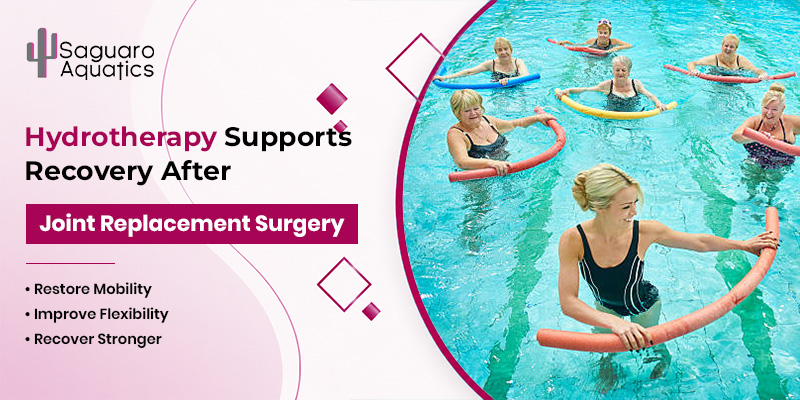
Joint replacement surgery can give people a new sense of freedom; they move better and don’t hurt as much. But the road to recovery is not always easy. It takes time. Most people have aches and stiffness, and their muscles are not as strong as they used to be. That’s where water therapy or hydrotherapy comes in. Water makes your body feel lighter, meaning less strain on the new joint.
Suddenly moving and working out don’t seem so hard. Water exercises help you build back strength, work on your flexibility, and get your balance back. Also, it generally hurts less during the entire process. This blog is about hydrotherapy after joint replacement to make you feel safer and more comfortable. Contact Saguaro Aquatics for quality inflammatory arthritis treatment in Oro Valley.
Table of Contents:
- Why is hydrotherapy often recommended during recovery?
- How does water therapy support muscle strength during recovery?
- Is hydrotherapy suitable for older adults recovering from joint replacement?
Why is hydrotherapy often recommended during recovery?
Hydrotherapy is popular for recovery because it lets people move around with less pain and effort. Being in water makes your body feel lighter, so there’s not as much strain on sore joints or muscles. Warm water isn’t just soothing; it actually eases stiffness and helps reduce pain. People find it easier to stretch and move in water than on land, which boosts flexibility and makes rehab less daunting. Hydrotherapy for senior arthritis care in Oro Valley helps with joint replacement recovery and improves blood flow. It’s a gentle alternative for staying active while you heal, and lots of folks turn to it after surgery since it makes recovery feel safer and a bit more comfortable.
How does water therapy support muscle strength during recovery?
When you’re trying to regain muscle strength after an injury or surgery, water therapy makes a real difference. In the pool, you have to push against the water with every step or movement. That resistance helps build muscle, but since the water supports your body, you aren’t putting extra pressure on painful joints. It’s an easier way to work out without leaving you feeling wrecked afterward. Stronger muscles mean better support for healing limbs and improved mobility overall. Water therapy, even simple exercises, can help with balance and coordination too. The therapeutic exercises for arthritis patients are safer for building muscle strength after surgery.
Is hydrotherapy suitable for older adults recovering from joint replacement?
Hydrotherapy after joint replacement for older adults is actually a great fit. The water gives them a cushion, easing pressure and letting them move without worrying about hurting their new joint. Warm water loosens up stiff muscles and helps relieve soreness. Water-based exercises don’t just build strength; they also help with flexibility and balance, making it easier for seniors to get around in daily life. Since hydrotherapy doesn’t push the body too hard, many older adults feel comfortable keeping up with their workouts. And with a therapist or doctor guiding the process, it’s a secure and gentle way for seniors to recover and get their health back on track.
Conclusion
Recovering from joint replacement surgery doesn’t have to be a struggle. When you exercise in water, it takes the edge off, reduces pain and gives you more freedom to move. Reach out today at (520) 638-8040to discover how our hydrotherapy programs can help you move and feel better.
FAQs
When can I start hydrotherapy after joint replacement surgery?
You can start after the period recommended by your doctor; that is when it will be safe to start water therapy.
Can this therapy help build my muscle strength?
Yes, it will help you build your muscle strength slowly and safely.
Do I need to know how to swim?
No, you do not need prior swimming experience because this therapy mostly takes place in shallow water.